1960s
The computer centre
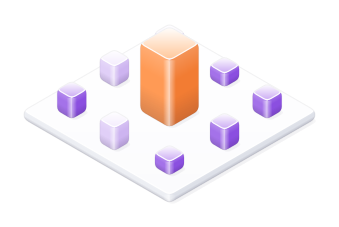
Computing lived in one room, run by specialists on everyone else's behalf. You asked, and you waited.
Plato is an operating system for an economy of people and agents. Each business owns the model of how it runs. AI learns from it, invents better ways of working and carries them out, and people decide what becomes real.
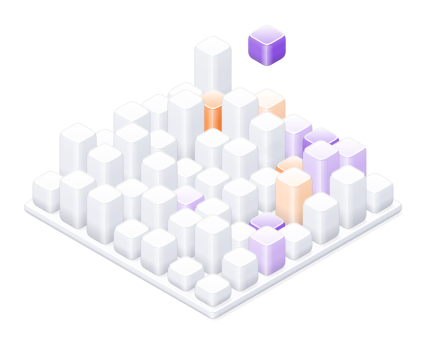
When control decentralises, things accelerate. The cloud took some of it back. AI is the chance to hand it to every business for good.
Computing lived in one room, run by specialists on everyone else's behalf. You asked, and you waited.

Control moved to the people doing the work. VisiCalc let an accountant build their own tools, and decentralisation became acceleration.

Collaboration got easy, and control went back to the vendor. Your data sits in someone else's silo, shaped by their roadmap.
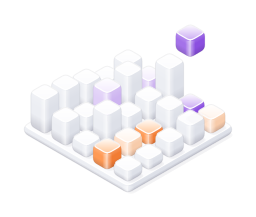
AI can write software as fast as you can describe it. The business owns the model, and people and agents run it together.
A model can summarise a contract in seconds, but it can't safely approve a variation, pay a claim or reschedule a crew, because those actions don't exist anywhere it can take them. The work is real; its shape is only in people's heads.
Give the work a defined shape, with records, actions, permissions and history, and an agent can act inside it. Every step is signed, checked against the rules, and reviewable before it lands. That is the difference between an assistant and a participant.
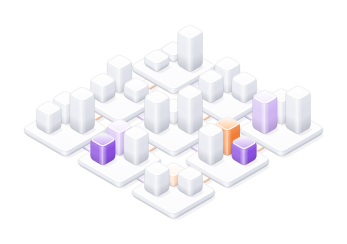
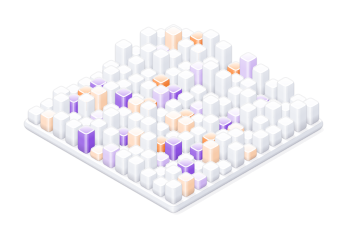
In 1964 Nikolai Kardashev ranked civilisations by the energy they command: all that reaches their planet, then their star, then their galaxy. We haven't reached the first rung.
Climbing it means building energy, factories and infrastructure at a scale no amount of email can coordinate. An economy that runs as software is one AI can help build, at a pace people can direct. That's the economy we're building for.

Every action is recorded with who took it, under what authority and why. That history is something agents can learn from: what worked, what stalled and what it really cost.
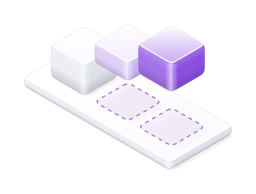
Agents draft alternatives on their own branches: a better schedule, a new process, a model for a business that doesn't exist yet. Nothing is lost by trying, because nothing is real until accepted.
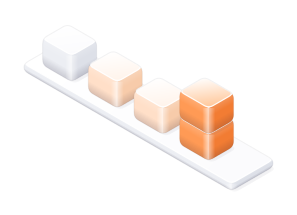
Approved work runs as defined actions, exactly as a person's would. Output grows with the number of agents you can direct, not the number of hands you can hire.
The goal isn't fewer people. It's each person directing far more than they could alone: setting purpose, holding authority and deciding what's good. Agents propose. People decide.
And the software answers to you. The model is yours, the data is yours, and no vendor's roadmap decides how your business runs.